
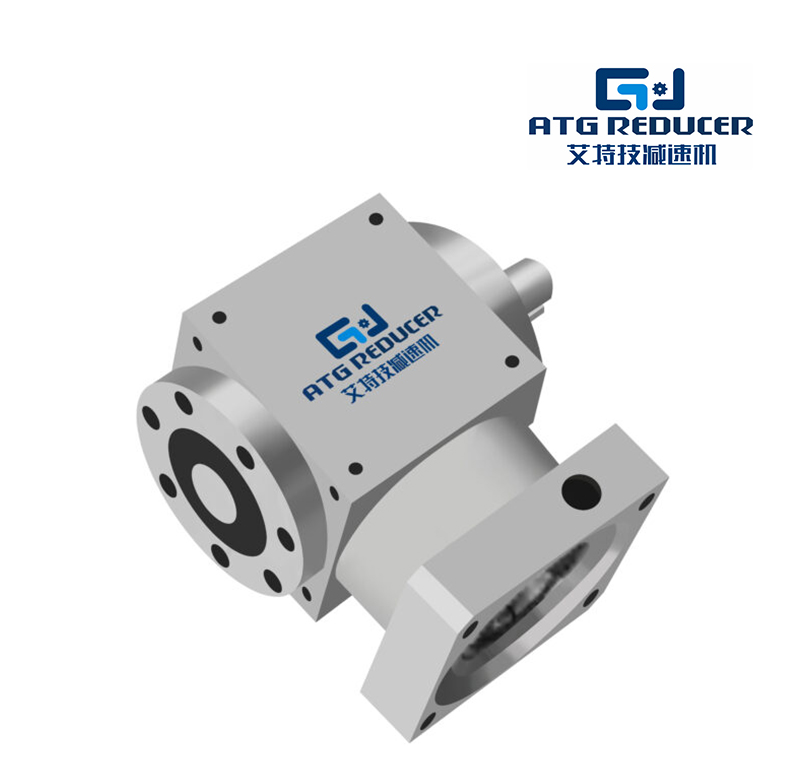
A joint module for robotic applications is a critical motion component designed to deliver controlled rotation, torque transmission, positioning accuracy, and mechanical flexibility in robotic systems. In modern automation, a joint module acts as the functional connection point between robotic links, helping a robot move with precision, repeatability, and load-bearing stability. Whether used in industrial robots, collaborative robots, service robots, inspection robots, medical devices, or mobile manipulation platforms, joint modules are essential for achieving smooth movement and reliable performance.
For search visibility and technical clarity, this guide explains what a joint module is, how it works, what specifications matter, where it is used, and why it is important in robotics. The content is written in plain English, structured for SEO, and designed to be useful for blog posts, category pages, industry pages, product overview pages, and technical content hubs.
A robotic joint module is an integrated electromechanical assembly that enables movement between robot segments. It typically combines a motor, reducer or transmission system, bearings, sensors, housing, and control interfaces into a compact unit. The module provides rotational motion or articulated motion at a specific axis, allowing the robot to bend, extend, swing, twist, or position end-effectors with high precision.
In robotics, joints are not just mechanical hinges. They are intelligent motion units responsible for torque output, angle control, dynamic response, and sometimes feedback sensing. Depending on the robot design, joint modules may be used in the shoulder, elbow, wrist, waist, ankle, or finger positions. They may also be embedded in custom automation systems, exoskeletons, and autonomous devices.
The performance of a robot depends heavily on the quality and design of its joints. A high-performance joint module improves movement accuracy, stability, payload handling, and energy efficiency. It also reduces mechanical backlash, vibration, and wear, which are common issues in repetitive motion systems.
In many robotic applications, the joint module determines:
Because of these factors, joint modules are among the most important components in robotic arm architecture, motion control systems, and automation hardware.
Joint modules can be categorized by motion type, structural layout, transmission method, and application environment. Different robot designs require different joint characteristics, but the main function remains the same: controlled movement with reliable force transmission.
| Joint Module Type | Main Function | Typical Use | Key Benefit |
|---|---|---|---|
| Rotary Joint Module | Provides circular motion around one axis | Industrial arms, wrists, mobile manipulators | Simple, efficient, compact motion control |
| Harmonic Drive Joint Module | Offers high reduction ratio and precise motion | Precision robots, collaborative robots | High torque density and low backlash |
| Direct Drive Joint Module | Connects motor output directly to motion axis | High-precision systems, research robots | Very smooth motion and low mechanical complexity |
| Planetary Gear Joint Module | Uses gear reduction for torque multiplication | Heavy-duty robotic joints | Strong load capacity and good efficiency |
| Integrated Smart Joint Module | Combines actuation, sensing, and control | Advanced robots, humanoid robots | Compact design with intelligent feedback |
Although designs vary widely, most joint modules contain a set of common elements. Each part contributes to motion accuracy, structural rigidity, heat management, or feedback control.
| Component | Function | Importance in Robotic Motion |
|---|---|---|
| Motor | Generates rotational force | Primary source of motion and torque |
| Reducer / Gearbox | Adjusts speed and increases output torque | Improves force transmission and control |
| Bearing System | Supports rotating elements and reduces friction | Enhances smoothness and mechanical life |
| Encoder | Measures angle, speed, and position | Enables precise closed-loop control |
| Housing | Protects internal components and maintains alignment | Improves durability and structural stability |
| Controller / Driver | Regulates movement and communication signals | Supports coordinated robotic operation |
| Thermal Management Elements | Helps dissipate heat from motor and electronics | Supports continuous operation and reliability |
A joint module works by converting electrical energy into controlled mechanical motion. In a typical robotic application, the controller sends a signal to the motor driver, which powers the motor. The motor output passes through a transmission system, such as a gearbox or direct coupling, to create the desired output torque and speed. Sensors, especially encoders, feed position and velocity data back to the control system.
This feedback loop allows the robot to move with high precision. The system can correct errors in real time, maintain exact angles, and handle changes in load. In advanced joint modules, force sensors or torque sensors may also be included for compliant motion, collision detection, and human-robot interaction safety.
Joint modules provide many technical and commercial benefits in robotics. These advantages make them a preferred solution for compact, high-performance, and scalable robotic design.
| Advantage | Description | Impact on Robotics |
|---|---|---|
| High Precision | Enables accurate position and angle control | Improves repeatability and task quality |
| Compact Design | Integrates multiple functions into one unit | Reduces robot size and weight |
| High Torque Density | Delivers strong output in a small package | Supports lifting, handling, and dynamic movement |
| Improved Reliability | Engineered for repetitive and long-term use | Extends service life in industrial environments |
| Better Integration | Combines actuation, sensing, and transmission | Simplifies system architecture |
| Lower Backlash | Reduces play in motion transmission | Supports smooth and stable robotic movement |
| Scalability | Can be adapted for different robot sizes | Useful for small, medium, and large systems |
Joint modules are used across many fields of robotics because they provide the core motion capability needed for articulated systems. Their application range continues to expand as automation becomes more advanced.
When evaluating a joint module for robotic applications, technical specifications are essential. These parameters determine whether the joint is suitable for a light-duty collaborative robot, a precision inspection arm, or a heavy industrial manipulator.
| Specification | Meaning | Why It Matters |
|---|---|---|
| Rated Torque | Continuous output torque the joint can sustain | Determines load-handling capability |
| Peak Torque | Maximum short-term torque output | Supports acceleration and transient loads |
| Rotational Speed | How fast the joint can move | Affects cycle time and responsiveness |
| Position Accuracy | How closely the joint reaches a target angle | Important for precision tasks |
| Repeatability | Ability to return to the same position consistently | Critical for automation reliability |
| Backlash | Mechanical play in the transmission | Lower backlash means better precision |
| Payload Capacity | Maximum load the joint can support | Affects end-effector and arm design |
| Protection Rating | Resistance to dust, moisture, and contaminants | Important in harsh industrial environments |
| Operating Temperature | Safe environmental temperature range | Ensures stable operation under real-world conditions |
| Communication Interface | Signals used to connect with the robot controller | Supports system integration and control |
The following table provides a general reference format for joint module specification pages. Actual values will vary by design, application, and mechanical requirements.
| Specification Category | Typical Range or Description |
|---|---|
| Module Diameter | Compact to medium-sized depending on robot architecture |
| Output Torque | Low, medium, or high torque depending on payload needs |
| Reduction Ratio | Varies from low-ratio direct drive to high-ratio precision reducers |
| Position Feedback | Incremental encoder, absolute encoder, or multi-sensor feedback |
| Control Mode | Position control, velocity control, torque control, or hybrid control |
| Duty Cycle | Continuous, intermittent, or high-performance cyclic operation |
| Structural Material | Aluminum alloy, steel, engineered composites, or mixed materials |
| Mounting Style | Flange mount, inline mount, compact integrated mount |
| Cooling Method | Passive cooling, conductive cooling, or active thermal management |
| Application Class | Light-duty, medium-duty, or heavy-duty robotic systems |
Selecting the right joint module requires balancing mechanical, electrical, and control requirements. A joint module that is ideal for a small inspection robot may not be suitable for a high-load industrial manipulator.
The robotics industry continues to move toward more integrated, intelligent, and compact joint solutions. Current design trends focus on improving motion density, reducing system complexity, and enabling smarter control.
For website publishers, a well-structured page about joint module for robotic applications can target multiple high-intent search terms, such as robotic joint module, robot joint actuator, robotic arm joint, integrated motion module, precision joint system, and robotic articulation component. A content page that includes definitions, applications, advantages, and specification tables tends to perform well because it matches both informational and technical search intent.
To improve ranking potential, the content should use the primary keyword naturally throughout the page, include related terminology, and present information in clear sections with headings, lists, and tables. This structure helps search engines understand topical relevance while making the page easier for users to scan.
The main function is to provide controlled motion between robot segments while delivering torque, position accuracy, and mechanical support.
No. Joint modules are used in collaborative robots, humanoid robots, service robots, medical devices, research platforms, and many other robotic systems.
Low backlash, accurate feedback, stable torque output, rigid construction, and good thermal control are all important for precision applications.
Integration reduces size, simplifies wiring, improves reliability, and makes robot design more efficient.
A joint module for robotic applications is a foundational component in modern robotics. It enables accurate movement, stable torque transmission, compact mechanical design, and intelligent motion control. From industrial automation to humanoid robotics, joint modules support the flexible articulation that robots need to operate effectively in real-world environments.
Understanding the types, components, specifications, advantages, and application scenarios of robotic joint modules is essential for engineers, buyers, integrators, and content creators. As robotics continues to evolve, the demand for compact, precise, and integrated joint modules will continue to grow, making this a highly relevant topic for technical content, SEO pages, and industry knowledge hubs.
```
Этот веб-сайт использует файлы cookie, чтобы обеспечить вам максимально эффективное использование нашего веб-сайта.

 Chinese
 EN
EN Español
 Deutsch
 Tiếng Việt



 телефон
Комментарий
(0)